Announcing the BC Young Optometrist of the Year: Dr. Sophia Capo. Read More

Kelowna's Neuro-Optometrist for Binocular Vision Dysfunction (BVD)
If your vision feels uncomfortable or difficult to manage even when you can see clearly, there may be more to assess.
At A B See Optometry, we evaluate how your eyes focus, track, and work together to better understand visual symptoms and recommend appropriate next steps.

When Should You Consider Neuro-Optometric Care?
Visual concerns can show up in different ways, including:
- Headaches or eyestrain
- Dizziness or motion sensitivity
- Blurry or double vision
- Difficulty reading or focusing
- Eyestrain with screens
- Poor depth perception
These symptoms can have many causes. A detailed assessment can help determine whether visual function is contributing.
Neurological Conditions That Can Affect Your Visual Function
Same Vision, Different Story
Many neurological conditions can lead to vision changes. Common examples include:
45-60% of concussions result in visual coordination problems, such as difficulty reading, light sensitivity, double vision and headache.
Strokes affect how our eyes interpret information, our eye coordination and our peripheral vision.
Multiple sclerosis can cause blurry vision, double vision and other eye coordination problems.
Parkinson's disease affects eye muscle movement control and can often result in double vision and blurry vision.
CP can affect how the muscles move to align.
Read about ASD and vision here.
Read about ADHD and Vision here.
Vision tracking and coordination issues are more common in children and adults with dyslexia and can compound reading difficulties.


What is binocular vision dysfunction?
Binocular vision is how your two eyes work together. When focusing or eye coordination is inefficient, reading, screen use, and other visual tasks may require more effort.
Common Types of Binocular Vision Dysfunction
Convergence insufficiency occurs when the eyes have difficulty working together at near. This can make it harder to maintain clear, single vision during tasks like reading, especially over longer periods.
Accommodative dysfunction affects how the eyes focus. It can make it difficult to keep things clear up close or shift focus between distances comfortably and efficiently.

How do I know if I have binocular vision dysfunction?
Binocular vision dysfunction isn’t always obvious—and it often isn’t detected in a standard eye exam.
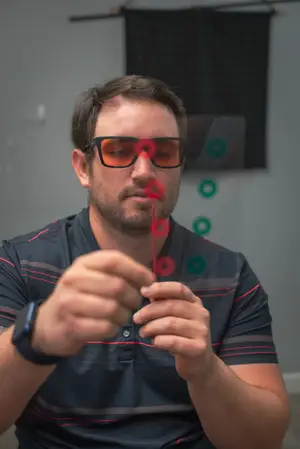
A Visual skills assessment will determine whether your eyes are working together efficiently and if treatment would be helpful.

How Do I Know if My Eyes Are Working Together Properly?
Clear eyesight does not tell us everything about visual function.
A Visual Skills Assessment to checks focusing, tracking, and eye coordination to determine whether a functional vision problem may be contributing to your symptoms.
Treatment for Eye Coordination problems
Treatment depends on what we find during your assessment and may include:
- Vision Therapy
- Prescription lenses
- Prism lenses
We’ll explain which options, if any, fit your visual needs.

FAQs
If something about your vision does not feel quite right, but you are not sure why, these common questions may help.
This can happen when your eyes are not working together efficiently. Your vision may appear clear, but your brain is compensating behind the scenes, which can lead to fatigue, discomfort, or difficulty concentrating.
This is often related to how your eyes coordinate and maintain focus over time. When your visual system is under strain, tasks like reading or screen use can become tiring more quickly than expected.
If you find yourself rereading lines, losing your place, or avoiding reading altogether, it may be related to how your eyes track and work together, rather than a problem with eyesight itself.
Some people experience discomfort in environments with a lot of visual input, such as grocery stores, screens, or movement around them. This can be related to how the brain is processing visual information.
Schedule a Consultation With One of Our Optometrists in Kelowna
Patients with neurological conditions or unexplained vision changes should schedule a neuro-visual assessment. Identifying and managing neuro-optometry and binocular vision dysfunction early can improve daily function, comfort, and quality of life.