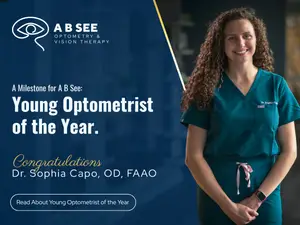
Announcing the BC Young Optometrist of the Year: Dr. Sophia Capo. Read More

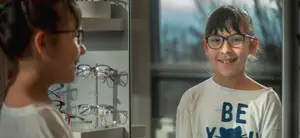
Success Begins With Sight: Myopia Management in Kelowna
If your child is squinting, holding things close, or their prescription keeps changing, it could be more than just needing stronger glasses.
Myopia (nearsightedness) often progresses over time, but with the right care, we can help slow that progression and support your child’s long-term vision.
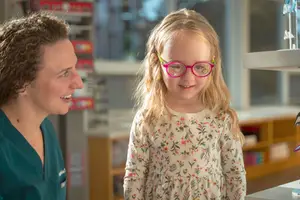
Have You Noticed Any of These Changes?
Vision changes are not always obvious — especially if your child assumes what they see is normal.
You might notice:
- Sitting closer to the TV or holding books very close
- Squinting or blinking more than usual
- Blurry distance vision
- Less interest in reading or schoolwork
- Saying they see “better with one eye”
- Frustration with visual tasks
These Could Be Early Signs of Myopia
These changes are often early signs of myopia, not just a passing phase.
Myopia is common and tends to develop gradually, which is why it can be easy to miss at first. Catching it early gives you more options to manage how it progresses.
What Causes Myopia?
It’s Not Just Screen Time
Myopia develops when the eye grows longer than it should, causing distant objects to appear blurry.
It’s influenced by both genetics and daily habits. Children with nearsighted parents are more likely to develop myopia. Long periods of close-up work and limited time outdoors can also play a role.
Understanding these factors helps guide the best approach for your child.
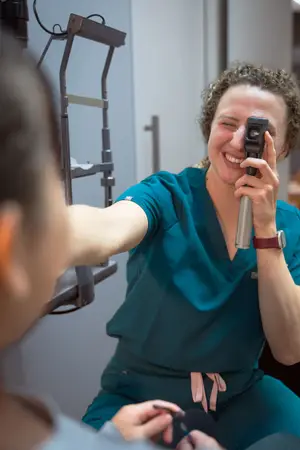

How We Help Manage Your Child’s Myopia
A common question we hear is: “Can we slow it down?”
In many cases, yes.
We offer options designed to reduce how quickly your child’s vision changes, including:
- Myopia management lenses
- Ongoing prescription monitoring
- Guidance on screen time and outdoor habits
We’ll recommend what fits your child’s needs and explain everything clearly, so you can feel confident in the next steps.
Myopia FAQs
If you are noticing changes in your child’s vision, these are some of the most common questions parents ask early on.
As children grow, their eyes grow too. This can cause their prescription to change more quickly, especially during school years. Tracking how often it changes helps determine whether we should step in to manage it.
Some change is expected as children grow, but larger or frequent increases in prescription may be a sign that it is progressing faster than we would like.
If glasses have been prescribed, they should be worn as recommended. Inconsistent wear can make it harder for your child’s visual system to function comfortably.
Extended close-up work, including screen use, can contribute to progression, especially when balanced with limited time outdoors. Small changes in daily habits can make a difference.
Book Your Child’s Eye Exam in Kelowna
Strong visual skills support learning, confidence, and everyday comfort. If you’ve noticed changes in your child’s behaviour, school performance, or vision, an eye exam is a simple first step toward answers.