Announcing the BC Young Optometrist of the Year: Dr. Sophia Capo. Read More

Concussions and Vision: The Only FAQ You'll Need
If you or your child has recently experienced a concussion, you may be wondering why things suddenly seem blurry, dizzy, or out of sync, even after medical clearance. While most people associate concussions with headaches or memory issues, vision is one of the most commonly affected systems after a brain injury.
A B See Optometry and Vision Therapy, we specialize in post-concussion vision care, helping patients across the Okanagan better understand what’s happening and how to recover. In this article, we answer the most frequently asked questions about how concussions affect your visual system and what you can do about it.
1. What is a concussion?
A concussion is a type of mild traumatic brain injury (mTBI). It occurs when a bump, blow, or jolt to the head disrupts the brain's function, even if there’s no loss of consciousness. You don’t have to hit your head directly; rapid movement (like whiplash) can also cause one.
2. What does a concussion do to your visual system?
A concussion affects the way your brain processes information, including vision. Even if the eyes are healthy, a concussion can interfere with how they work together, focus, or track movement. That’s because the brain controls vision, not just the eyes.
3. Can a concussion cause vision problems even if my eyes are fine?
Yes. This is one of the most common misconceptions we see. Many people have 20/20 eyesight but still struggle with reading, balance, or screen use after a concussion. That’s because the problem isn’t in the eyes; it’s in how the brain and eyes work together.
4. Do all concussions cause vision problems?
Not always, but vision problems are very common. Studies show that more than 50% of people with concussions experience some kind of visual disturbance. These can include trouble focusing, light sensitivity, or blurry vision. Sometimes, the symptoms are subtle and easy to miss without a proper assessment.
5. What are the most common vision symptoms after a concussion?
Some of the most common symptoms include:
- Blurry or double vision
- Eye strain or tired eyes
- Headaches with reading or screen time
- Light sensitivity
- Dizziness or motion sickness
- Trouble focusing or shifting gaze
- Poor depth perception
- Feeling off-balance in busy environments
These symptoms can show up right away, days, or even weeks later.
6. My child had a concussion, what should I watch for?
Children may not describe vision problems the same way adults do. Watch for:
- Avoiding reading or screen time
- Complaining that “words are moving” or “things look weird”
- Trouble with schoolwork
- Clumsiness or poor balance
- Mood changes or frustration with tasks they used to enjoy
If you notice any of these, it’s a good idea to book a post-concussion vision assessment at A B See Optometry and Vision Therapy.
7. What is Post-Concussion Vision Syndrome?
Post-Concussion Vision Syndrome refers to ongoing visual problems caused by a concussion. Even after other symptoms improve, the eyes and brain may still have trouble working together, leading to blurry vision, focus issues, or motion sensitivity.
8. Why didn’t my regular eye exam find anything wrong?
Standard eye exams check for eye health and visual clarity, like whether you can read the 20/20 line. They don’t test how well your eyes work together, how they move, or how your brain processes visual information. That’s why these issues often go undetected unless you see an optometrist trained in neuro-optometry.
9. What is a neuro-optometric assessment?
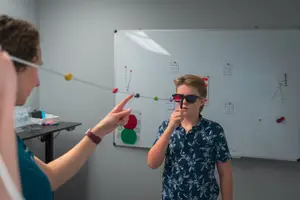
It’s a specialized exam that looks at how your brain and eyes communicate. At A B See Optometry and Vision Therapy in Kelowna, we assess eye teaming, focusing ability, tracking, depth perception, and visual processing. This helps us identify vision problems caused by a concussion that aren’t picked up in a regular eye test.
10. How Can a Kelowna Eye Doctor Help?
If you or your child is still dealing with vision problems after a concussion, whether it’s been days, weeks, or even months, you don’t have to wait it out or “just live with it.” At Kelowna, we specialize in post-concussion vision care for patients of all ages. Our eye care team uses advanced neuro-optometric testing and personalized therapy programs to help rebuild visual function and support long-term recovery.
Book an eye care appointment to find out how we can support your healing and help you feel like yourself again.