Announcing the BC Young Optometrist of the Year: Dr. Sophia Capo. Read More
What Are Bioptic Telescopes? Understanding Low Vision Aids
Most people think of prescription glasses as the answer to most vision problems. Glasses work well for many common refractive errors, but some eye conditions reduce vision in ways that standard eyeglasses or contact lenses cannot fully correct.
For people living in communities like Kelowna, where driving, outdoor recreation, and community events are part of daily life, comprehensive eye exams at A B See Optometry and Vision Therapy can help find the tools and strategies to maximize functional vision.
Looking Beyond Standard Eyeglasses
Low vision describes permanent vision loss that cannot be fully corrected with glasses, contact lenses, medication, or surgery. Conditions such as age-related macular degeneration, optic nerve disease, albinism, and inherited retinal disorders can all reduce visual clarity.
Many people with low vision still have useful vision. The goal shifts from restoring eyesight to helping patients use their remaining vision more effectively.
What Are Bioptic Telescope Glasses?
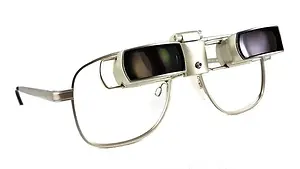
A bioptic telescope is a small telescope mounted near the top of a pair of prescription glasses. Unlike binoculars, it is not designed for continuous viewing.
Instead, the wearer looks through their regular eyeglass lenses most of the time. When they need to see something farther away in greater detail, they briefly tilt their head to look through the miniature telescope before returning to their normal line of sight.
This quick movement provides extra detail while allowing the user to stay aware of their surroundings.
Who May Benefit From Bioptic Telescopes?
A bioptic telescope is not the right choice for everyone with low vision. Success depends on several factors, including visual acuity, peripheral vision, eye health, cognitive function, and personal goals.
Learning to use a bioptics also takes practice. With guidance and training, many people become comfortable knowing when to use the telescope and when to rely on their natural vision.
Finding the Right Fit
Choosing a bioptic telescope involves much more than selecting a magnification level. Every device should match the patient's vision, daily activities, and comfort.
A low vision assessment typically includes measurements of distance vision, visual field, contrast sensitivity, and performance on everyday tasks. Your eye doctor may recommend different telescope designs depending on your needs.
Some devices offer wider fields of view, while others provide greater magnification. The goal is to balance clearer detail with awareness of the surrounding environment.
Vision Care Goes Beyond One Device
A bioptic telescope is only one part of low vision rehabilitation. Many patients benefit from combining several tools and strategies based on their daily routines.
Depending on your needs, your eye doctor may also recommend:
- Magnifiers for reading
- Electronic video magnifiers
- Improved lighting
- Contrast enhancement techniques
- Large-print materials
- Customized prescription glasses
Combining multiple solutions often provides greater benefits than relying on a single option.
Visit Your Low Vision Eye Doctor in Kelowna, BC
Living with low vision does not mean giving up the activities you enjoy. With thoughtful planning and the right technology, many people continue to read, learn, work, and participate in their communities.
At A B See Optometry and Vision Therapy, we begin with a low vision assessment to understand both your vision and your daily goals. From there, we recommend practical solutions that fit your lifestyle, whether that includes bioptic telescopes, specialized prescription glasses, or another low-vision aid.
If you would like to learn which strategy could help you make the most of your remaining vision, schedule an eye exam today.
Frequently Asked Questions
Can a bioptic telescope replace prescription glasses?
No. A bioptic telescope works alongside prescription glasses. Most of the time, users look through their regular eyeglass lenses and briefly look through the telescope only when extra magnification is needed.
Does every person with low vision need bioptics?
No. Low vision rehabilitation is highly personalized. Some patients benefit from a bioptic telescope, while others achieve better results with magnifiers, electronic devices, specialized lighting, or other low vision aids.
Can I drive with bioptic telescopes?
Some provinces and states allow certain people with low vision to drive using a bioptic telescope if they meet specific vision standards and licensing requirements. Eligibility varies by jurisdiction, so your eye doctor can explain the regulations that apply.